Food Research Institute mission: 37% of emissions from food
"The food and agricultural system is one of the major contributors to climate change, accountable for as much as 37% of the total greenhouse gas emissions."
This government-funded research institute works to stabilize the supply chain and enhance food quality through scientific innovation.
* * Understanding the impact of conventional agriculture on the environment. * The importance of grain production and crop utilization. * A look at how food processing and storage advancements provide stability.
##
A researcher adjusts a microscope in a sterile laboratory, looking for ways to extend the shelf life of organic materials.
This institution works to secure the technological foundation for the future of food.
The primary mission involves advancing the science of food to ensure safety and efficiency across the supply chain. By focusing on advanced food preservation methods, the institute helps mitigate waste and improve nutritional stability.
These efforts are vital as global food demands fluctuate and resource availability changes.
The scope of the work often involves addressing the complexities of modern agriculture and the need for sustainable processing. This mission ensures that the domestic food industry remains competitive on a global scale.
Scientific breakthroughs in the lab translate to more reliable food products for the public.
The institute focuses on advancing food science to ensure a stable and high-quality food supply.
How does agriculture impact the global environment?
A farmer looks over a vast field of crops, noting the heavy machinery required for the harvest.
This system of conventional agriculture relies heavily on fossil fuels, which means that the food and agricultural system is one of the major contributors to climate change, accountable for as much as 37% of the total greenhouse gas emissions.
Such environmental pressure necessitates a shift toward more efficient food industry development research.
The environmental footprint of food production is significant due to carbon emissions and resource depletion. As the climate changes, the stability of crop yields becomes increasingly uncertain.
Developing smarter ways to process and store food can reduce the energy required for transport and preservation.
The intersection of technology and ecology is where much of the current research resides. By finding ways to minimize the energy used in food production, researchers can help lower the overall carbon output. This balance is essential for the long-term viability of global food systems.
Agricultural practices directly influence land use, water consumption, and carbon cycles worldwide.
Why is grain production and crop usage significant?
A heavy harvester moves through a golden field of wheat, collecting the harvest for global markets. Corn (maice), wheat, and rice account for 87% of all grain production worldwide.
This high concentration of specific crops means that any disruption to their production or processing has massive global implications.
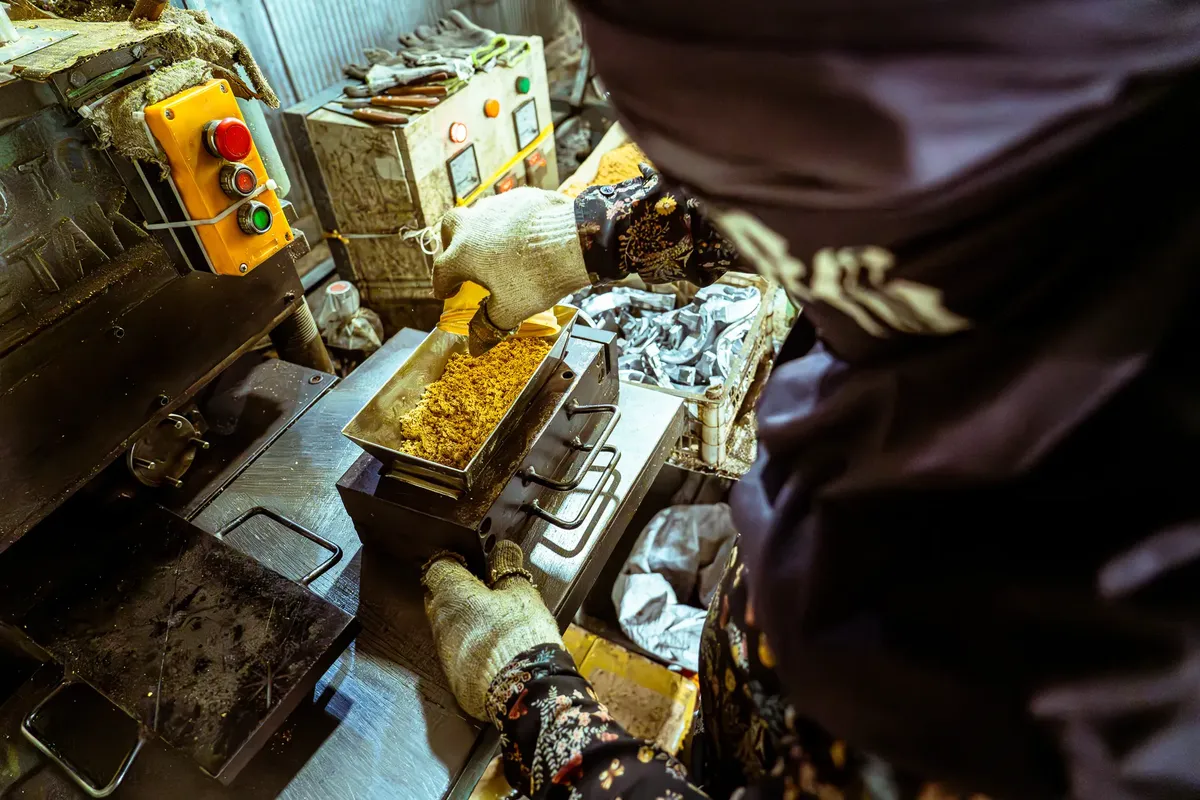
The global food supply is heavily dependent on a few primary sources. Just over half of the world's crops are used to feed humans (55 percent), with 36 percent grown as animal feed and 9 percent as energy crop for biofuels.
This distribution highlights the tension between human nutrition and other industrial uses.
Managing these resources requires precise Agri food R&D Korea and international cooperation. Ensuring that these staple crops can be processed and stored efficiently is a top priority for food scientists. The goal is to maximize human nutrition while managing the needs of animal feed and bioenergy.
Grains serve as a primary caloric source for much of the global population.
How can food storage innovation improve stability?
A technician carefully seals a vacuum-packed container in a temperature-controlled room. Food storage innovation is critical because the global food supply chain is sensitive to temperature and time.
Efficient storage methods can prevent spoiling and reduce the need for constant, energy-intensive refrigeration.
The mismatch between production and consumption often leads to significant food loss. Developing better ways to stabilize products can bridge the gap between harvest and the consumer. This is particularly important for regions where the infrastructure for cold chains is still developing.
The research into food storage often looks at molecular stability and microbial control. By understanding how food breaks down at a cellular level, scientists can design better packaging and storage environments. This work directly supports the stability of the global food supply.
- Develop advanced packaging materials to prevent spoilage.
- Implement climate-controlled environments to maintain freshness.
- Integrate smart monitoring systems to track quality in real time.
What are the steps to implement new food technologies?
An engineer reviews the blueprints for a new automated processing line. Implementing new food technologies requires a structured approach to move from the laboratory to the factory floor.
- Conduct foundational research to identify the specific biological or chemical stability issues of a food product. 2. Develop prototypes for processing or packaging that address the identified challenges without compromising nutritional integrity. 3. Perform rigorous testing to ensure the new technology can be scaled up and remains consistent under various environmental conditions.
I once observed a pilot run of a new dehydration method, where the focus was on maintaining flavor while reducing moisture content. This process requires careful calibration to ensure the results are repeatable in a mass-production setting.
A limitation of these technologies is that they often require significant initial investment in infrastructure, which may not be feasible for smaller producers in developing regions.
In this sequence, the second step is the longest.
World Bank
Korea Food Research Institute mission
The subject here is Korea Food Research Institute mission.
The same subject is also called Food processing tech Korea.
The same subject is also called Future food tech Korea.
This part also covers Korea Food Research Institute projects.
Korea Food Research Institute projects
Related





Comments 0