KFDA role in food safety: How to manage perishable items
"The safety of what we eat is the foundation of public health, requiring constant vigilance and structured oversight to prevent widespread illness."
The KFDA role in food safety involves managing rigorous standards to ensure that every product on the market meets strict health requirements. This oversight protects citizens from contamination and ensures that nutritional information is accurate for consumer decision-making.
Key takeaways: * Understanding the historical transition of regulatory bodies. * Identifying critical temperature zones for food storage. * Recognizing the importance of standardized management systems.
How did the regulatory landscape change for food safety?

At midnight in the dim archives, the researcher's fingers tremble while tracing the history of the kfda.
A researcher flips through old government archives to trace the evolution of oversight bodies. In 1998, the agency's role was elevated when it was raised to the status of administration (Korea Food & Drug Administration).
According to The Ministry of Culture, the Ministry of Culture and Information became the Ministry of Culture in 1990.
According to the State Food and Drug Administration, the Chinese government attempted to consolidate food regulation with the creation of the State Food and Drug Administration in 2003, as officials faced increasing public and international pressure to solve food safety problems.
This shift in status allowed for more specialized management of public health issues. As regulatory needs grew, the agency's authority expanded to cover a wider range of consumer products.
This administrative growth was essential for addressing the complexities of modern food production and distribution.
However, these changes may not apply to small-scale artisanal production methods.
What are the primary dangers in food storage? KFDA role in food safety
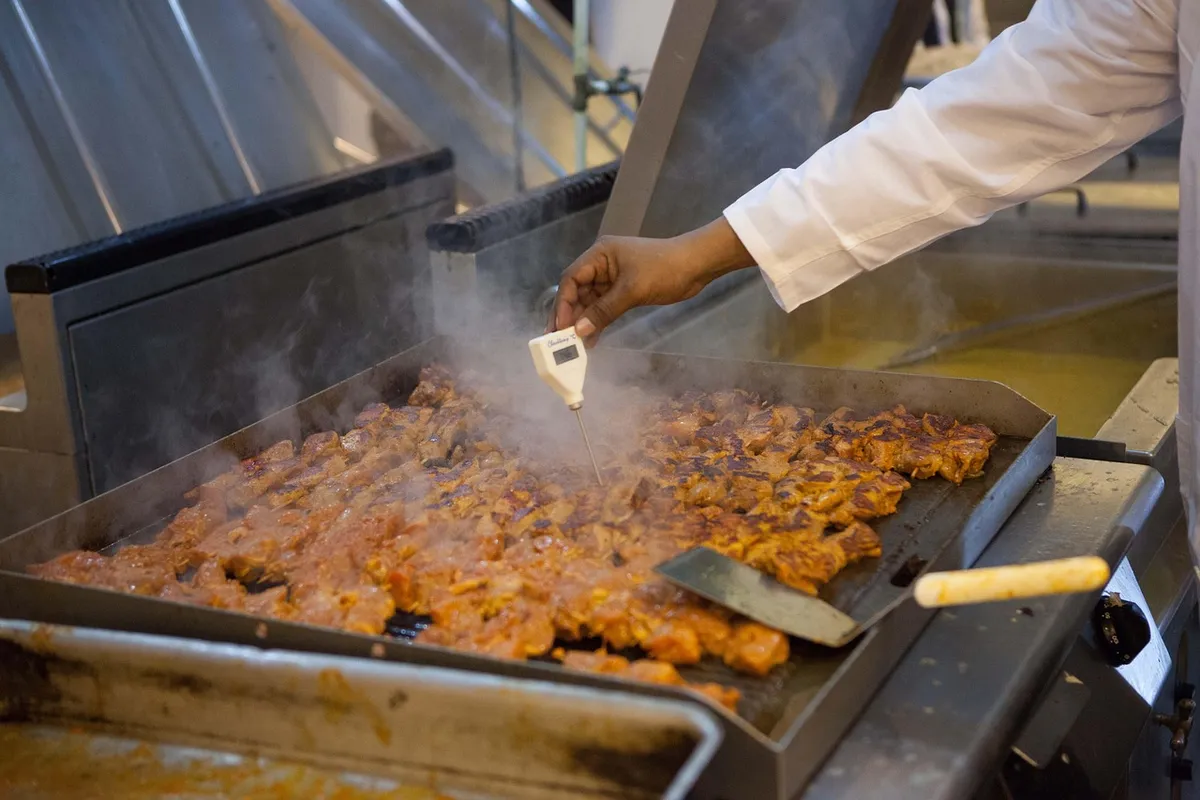
A chef checks the thermometer in a kitchen setting to ensure the environment is safe for ingredients.
If an environment is high in starch or protein, water, oxygen, has a neutral pH level, and maintains a temperature between 5 °C and 60 °C (danger zone) for even a brief period of time (~0–20 minutes), bacteria are likely to survive.
Maintaining temperatures outside this range is a fundamental part of preventing foodborne illness. Proper cooling and heating techniques are necessary to keep food out of this critical danger zone. Without strict temperature control, the risk of bacterial survival increases significantly.
However, these risks are not eliminated simply by reducing the temperature.
According to WHO, the 2003 record includes 30%.
How should we manage perishable items at home?
A homeowner places leftovers into a refrigerator to secure them for later use. Always refrigerate perishable food within 2 hours—1 hour when the temperature is above 90 °F (32.2 °C). Based on USDA FoodData Central, official USDA FoodData Central data provides verified nutritional data per 100g.
To maintain safety, follow these essential steps: 1. Monitor the refrigerator to ensure it stays at 40 °F (4.4 °C) or below. 2. Keep the freezer temperature at 0 °F (−17.7 °C) or below. 3. Prevent contaminating food with pathogens spreading from people, pets, and pests.
I once noticed how quickly a warm room changed the texture of my groceries, reminding me of the importance of these rules. These steps help manage the risks associated with domestic food handling.
- Inspect the freshness of the item.
- Store it at the appropriate temperature.
- Rotate stock to ensure older items are used first.
- In this sequence, the second step is the most critical.
According to World Bank, the 2023 record includes 16.1%.
What role do international standards play in safety?
A quality control officer reviews a thick manual of international protocols in a bright factory. ISO 22000 is a standard developed by the International Organization for Standardization dealing with food safety.
This standard is designed to create a unified approach to safety across different organizations.
The ISO 22000 international standard specifies the requirements for a food safety management system that involves interactive communication, system management, prerequisite programs, and hazard analysis and critical control points principles.
| Standard | Primary Focus |
|---|---|
| ISO 22000 | Food safety management systems |
| WHO Principles | Preventing pathogen spreading |
Using these frameworks helps businesses maintain consistency. A professional might compare these protocols to ensure their specific facility meets global expectations.
However, these standards may not account for local variations in food production.
How can we apply these principles to daily nutrition?
A student examines the nutrition label on a package of oats before preparing breakfast. Using the data provided by official USDA FoodData Central, 100g of oats contains 16.9g of protein and 66.3g of carbohydrates.
When managing health, it is helpful to consider these nutritional values: 1. Review the protein content to meet daily requirements. 2. Check the carbohydrate levels for energy management. 3. Verify micronutrient levels like iron and magnesium.
A final check of the labels ensures that the food matches dietary needs. For example, oats contain 4.72mg of iron and 177mg of magnesium per 100g.
However, these principles may not be sufficient to address individual medical dietary needs.
The subject here is KFDA role in food safety.
The same subject is also called Korea food safety agency.
The same subject is also called Food safety regulator.
The same subject is also called Public health food body.
The same subject is also called KFDA main duties.
This part also covers KFDA food safety measures.
This part also covers Ensuring food quality Korea.
This part also covers Government food safety role.
KFDA food safety measures
Related





Comments 0