Korean food trends product: Guide to industry growth
"The evolution of food production reflects the shifting needs of a nation, moving from basic sustenance to sophisticated convenience."
This article explores how South Korean food companies transitioned from early packaged snacks to market-leading staples through strategic product development.
We will examine the historical timeline of industry growth, the impact of specific product launches on market dominance, and the scale of corporate influence within the national economy.
* Early commercialized snacks like Beef Ramyun and Saeukkang set the stage for the industry. * Strategic product launches in the late 1980s led to massive market share growth. * Large corporate groups now hold a significant portion of the national GDP.
How did early snack development shape the industry?
A person reaches for a bag of snacks in a quiet corner of a grocery store, reflecting on how much the selection has changed over decades. The journey of Korean food industry evolution began with the introduction of the first commercialized packaged snacks.
This was followed by Saeukkang (새우깡) in 1971, marking a significant shift in consumer habits. These early products paved the way for modern dietary shift product idea implementation.
The initial success of these snacks allowed companies to establish a presence in a rapidly changing market. As consumer tastes moved toward convenience, the groundwork for large-scale food production was laid.
This era of innovation established the consumer base that would later support much larger brands.
What were the key milestones in market dominance? Korean food trends product
At the office during sunset, I stared at the screen and felt a sudden chill as the Korean market trends shifted on the monitor.
A manager looks over a spreadsheet, tracking the sudden surge in sales that follows a successful product launch. The Korean food trends product development often hinged on specific, timed releases that captured the public's attention.
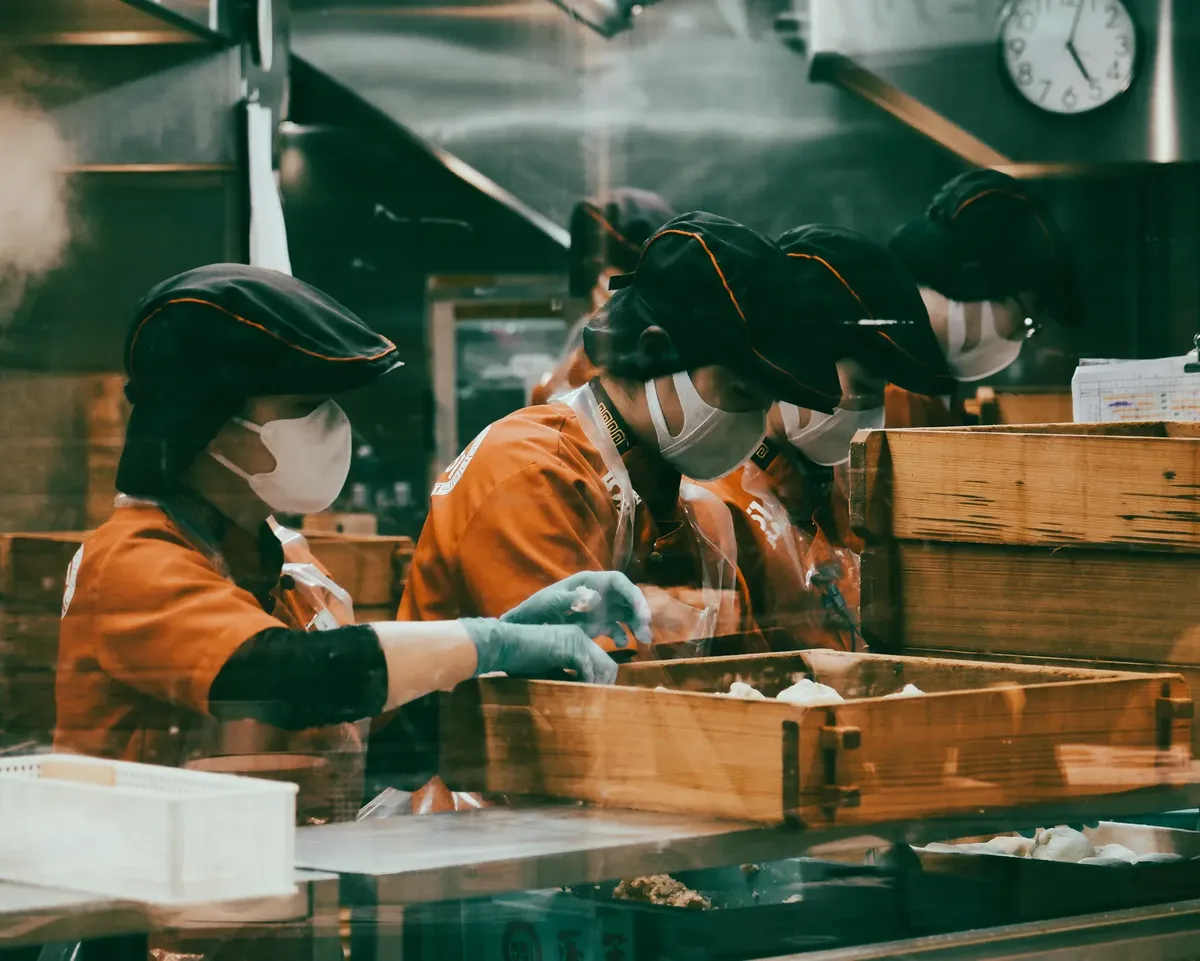
Nongshim achieved a 35% market share in the mid-1970s following its early product releases. By 1984, the company's market share reached 40%, and it became a leading company of the market in March 1985. These figures show how consistent product availability drove growth.
The introduction of Shin Ramyun in 1986 changed the landscape entirely. With this brand, the company reached a 46.2% ramyun market share in 1987, 53.2% in 1988, and 58% in 1989. This rapid expansion demonstrated the power of a single, beloved brand in securing market leadership.
According to World Bank, the 2023 record includes 16.1%.
How does the scale of these companies compare to the national economy?
An economist reviews national economic reports, noting the massive influence of large corporate entities on the country's financial health. The relationship between food company product change and the broader economy is deeply intertwined with the country's GDP.
According to the Korea Occupational Safety and Health Agency, it was revealed on October 24, 2022, that the group had more than 100 industrial accidents per year lodged with the Korea Occupational Safety and Health Agency since 2019.
In 2023, the revenue of the top four chaebols—Samsung, SK, Hyundai, and LG—was 40.8% of the South Korean GDP. Furthermore, the top thirty chaebol accounted for 76.9% of the GDP. This concentration shows how much of the economy is driven by large-scale corporate groups.

The intensity and extent of market concentration is evident, as 80% of the country's GDP is derived from chaebols. This scale means that the success of these companies often dictates the economic pulse of the nation. The food industry remains a vital component of this massive economic structure.
What is the current structure of these large corporations?
A researcher examines an organizational chart, tracing the complex web of subsidiaries and holdings that make up a modern conglomerate. Understanding the corporate history product line requires looking at how these groups are structured today.
Nongshim has 10 affiliates, including Nongshim Holdings, Taekyung Nongsan, Youlchon Chemistry, Mega Mart, Nongshim Communication, NDS (Nongshim Data System), Nongshim Engineering, Youlchol Foundation, Hotel Nongshim, and Nongshim Development.
This diversification helps manage various sectors of the economy.
These structures allow companies to manage everything from food production to logistics and hospitality. Such diversification was essential for maintaining stability during periods of economic shift. It also allowed for the vertical integration seen in many modern industries.
How do external factors influence corporate stability?
A financial analyst monitors international market trends, noting how foreign investment affects domestic giants. The stability of these companies is often tied to global investor interest and national economic shifts.
As of January 2025, many Chaebol corporations have a high share of foreign investors. For example, Samsung Electronics has a 73% foreign investor share, Hyundai Motors at 50%, and SK Hynics at 55.8%. This level of international involvement brings both capital and volatility.
| Metric | Value |
|---|---|
| Top 4 Chaebol GDP Share (2023) | 40.8% |
| Top 30 Chaebol GDP Share (2023) | 76.9% |
I observed how these massive shifts in market share occurred through the lens of these historical data points. A limitation to this analysis is that the specific impact of food-only companies on the total 80% GDP share is not isolated here.
The same subject is also called Modern food product design.
This part also covers Company history product line.
This part also covers Adapting to modern eating.
This part also covers Innovation in Korean diet.
Company history product line
Related
- CJ Group business evolution: Food to global lifestyle guide
- Kimchi research institute history: Guide to global standards
How did the evolution of food production compare to modern needs? 1. The initial focus on basic sustenance in the early stages contrasts sharply with the modern need for sophisticated convenience. 2. This shift mirrors the broader national trend where simple packaged goods evolved into complex market staples. 3. The successful adaptation of the food industry products allowed them to meet these evolving consumer demands successfully.
This comparison highlights how the original products served as a foundation upon which modern market expectations were built.





Comments 0